
Article overview
Choosing nursing can feel exciting and slightly daunting at the same time. On one hand, you may already know you want a career that matters. On the other hand, you keep hearing that you “need experience” – and if you cannot get NHS shadowing, it can start to feel like the door is closing before you even apply.
In reality, work experience is not always a strict requirement for nursing degrees in the UK. However, it can still make your application far stronger. It gives you evidence that you understand the role, the realities of care, and the values universities assess at interview. It also helps you write a more convincing personal statement because you can show real insight instead of relying on general claims.
This guide is written for sixth-form students, Access to HE learners, and mature applicants. It focuses on what experience actually counts, how to get it realistically, and how to use it well in a UCAS application and interview. Along the way, you will also learn what to do if you have no formal care experience, how values-based recruitment works in nursing, and what to expect with Disclosure and Barring Service (DBS) and occupational health checks once you receive an offer.

Do You Need Work Experience for a Nursing Degree?
At the start of your journey, it helps to separate two ideas that often get mixed up: required and recommended.
A requirement usually means a course will not consider you without it. A recommendation means you can apply without it, but you will compete better if you can show it. Nursing sits in the second category for many universities. They rarely set a fixed number of hours for experience, yet they still expect evidence that you understand what you are applying for.
Universities need to see that you have explored nursing in a realistic way. They also need confidence that you understand the emotional and physical demands of care. Because of that, experience often becomes the simplest proof.
That said, nursing applicants often face real barriers. You might struggle to secure NHS shadowing. You might have caring responsibilities at home. You might work to fund your studies. Or you might live in an area with limited placements. None of these factors should stop you from applying. Instead, you can focus on experiences that meet the same intent.
When admissions teams talk about ‘experience’, they usually mean you can show you have:
- Observed care or support in action, even in a non-clinical setting.
- Communicated with people who have different needs, emotions, or abilities.
- Built resilience and calmness when things feel busy or unpredictable.
- Reflected on what you learned and what you would do differently next time.
- Understood boundaries, confidentiality, and professional behaviour.
This approach aligns closely with what UCAS encourages for nursing personal statements: show understanding, show motivation, and write about experience in a reflective way rather than listing tasks. You can explore this style in the UCAS nursing personal statement guide.
Therefore, you do not always need formal work experience. However, you do need evidence. If you can gain direct exposure to care, great. If you cannot, you can still build strong evidence through volunteering, paid roles, and transferable examples.
Nursing Degree Entry Requirements in the UK
Before you plan how to get your experience, you need a clear picture of what universities and the profession require. Nursing is a regulated profession, so entry expectations include both academic criteria and suitability checks.
Different universities set different grades. They also vary in what they accept as equivalent qualifications. Still, most programmes share the same overall shape: you need a solid base in literacy and numeracy, a Level 3 route that shows you can study at a higher level, and a selection process that tests your understanding and values.
For many applicants, requirements start with GCSEs. Courses often ask for English Language and Maths, and they may ask for a science. Some also accept equivalents, which can matter for mature learners or Access to HE students.
At Level 3, universities commonly accept routes such as A levels, BTEC, or an Access to HE Diploma. Access courses can work especially well for mature applicants because they build academic confidence and often include health-related units. Even so, universities can differ on which Access pathways they prefer, so always check individual course pages early.
Alongside academics, you will usually complete selection steps designed to test suitability for practice. Nursing programmes follow professional standards set by the Nursing and Midwifery Council (NMC). These standards shape what students must learn and how they develop in practice placements. You can see the bigger picture in the NMC Standards for pre-registration nursing programmes and the NMC Standards for student supervision and assessment.
In plain terms, this means universities need to feel confident that you can train safely. That is why selection often includes interviews, situational questions, and a focus on values. It is also why pre-enrolment checks matter later, such as DBS and occupational health screening.
So, even before you think about experience, it helps to see the full pathway. You are not only applying for a degree. You are also stepping into a profession with responsibilities, standards, and public trust.
What Counts as Nursing Experience?
Many applicants assume nursing experience means following a nurse around a hospital ward. That can be valuable, but it is not the only option, and it is not always the best option either.
In fact, admissions teams often care more about what you learned than where you stood. A few meaningful hours where you spoke to people, supported dignity, and reflected properly can beat a longer experience where you only watched from a distance.
What types of nursing experience count the most?
A simple test helps: does the experience give you insight into people, care, safety, teamwork, and communication? If yes, it can usually support your application, as long as you explain the link clearly.
Most nursing-relevant experiences fall into three useful buckets.
1) Direct care experience
These roles involve supporting someone’s daily living, comfort, or well-being. Examples include care assistant roles, domiciliary care, supported living work, or informal caring where you take responsibility for someone’s needs.
2) Health and social care environments
These settings help you understand routines, teamwork, confidentiality, and basic care standards, even if you do not deliver clinical procedures. Examples include care homes, day centres, GP reception roles, hospices, and hospital volunteering.
3) Transferable experience with strong people skills
These experiences build behaviours nurses use daily: listening, explaining clearly, staying calm, showing respect, and working within rules. Examples include customer service, childcare, youth work, and coaching.
To make any experience ‘count’, you also need reflection. This means you should not only say what you did, but you should also explain what you learned, what challenged you, and how it shaped your understanding of nursing.
If you want a reliable foundation for your understanding of nursing roles across settings, the NHS Health Careers nursing information can help you explore what nurses do and where they work.

NHS Shadowing for Nursing Applicants
NHS shadowing can be brilliant because it shows you how a clinical team works in real time. It can also help you see the pace, the priorities, and the way nurses communicate in high-stakes moments.
However, NHS shadowing is not always easy to arrange. Trusts must protect patient privacy, safety, and infection control. They also have to consider staff capacity. As a result, many areas offer structured work experience programmes rather than casual shadowing.
If you do access shadowing, treat it like a professional opportunity from day one. That means you should arrive early, dress appropriately, and follow all guidance. It also means you should never share patient details, even casually.
If you struggle to find shadowing, remember that you are not alone. Many applicants cannot get NHS shadowing, especially under-18s. This is why universities often accept other evidence that meets the same intent.
Still, if you want to try, aim for a clear and realistic request. You can email your local NHS trust’s work experience or volunteering team, and you can ask about structured opportunities rather than asking a ward manager directly.
A simple request often works best:
- Say who you are and what you are applying for.
- Explain your availability and any timing limits.
- Ask what opportunities they offer for prospective nursing students.
- Thank them and ask if they can point you to the correct contact.
Even if you do not get shadowing, you can still show proactive effort. For example, you can mention that you contacted trusts and explored alternatives, which shows resilience and realism.
If you want a starting point for NHS opportunities, you can look at the NHS Volunteering website, which signposts volunteering routes across England and explains different role types.
Nursing Volunteering Options in the UK
Volunteering can be one of the most realistic routes into care experience, especially when paid roles feel like too big a jump at first. It also works well for sixth-form students because you can fit it around study.
The key is to choose volunteering that involves real people and real responsibility, not just fundraising or occasional events. Admissions teams tend to value direct contact because it gives you examples to reflect on.
A great place to begin is formal NHS volunteering. The NHS England volunteering information explains how volunteering is organised and what kinds of roles exist in hospitals and ambulance trusts.
Alongside NHS routes, long-established charities also offer hospital-related roles. For example, you can explore hospital volunteering with Royal Voluntary Service, which supports NHS hospitals and communities.
You can also consider more flexible schemes. In England, the NHS and Care Volunteer Responders programme offers opportunities that can fit around study and work, depending on what is available locally.
Practical volunteering roles that often translate well into a nursing application include:
- Ward helper or hospital guide roles, supporting people to find departments and feel less anxious.
- Befriending roles, especially with older adults who feel isolated.
- Activities support in care homes or day centres.
- Patient support roles that focus on comfort, conversation, and dignity.
Whatever you choose, keep a reflective note after each session. This habit helps because you can later describe your learning clearly. It also means you do not panic before interviews trying to remember examples.
Care Home Experience for Nursing
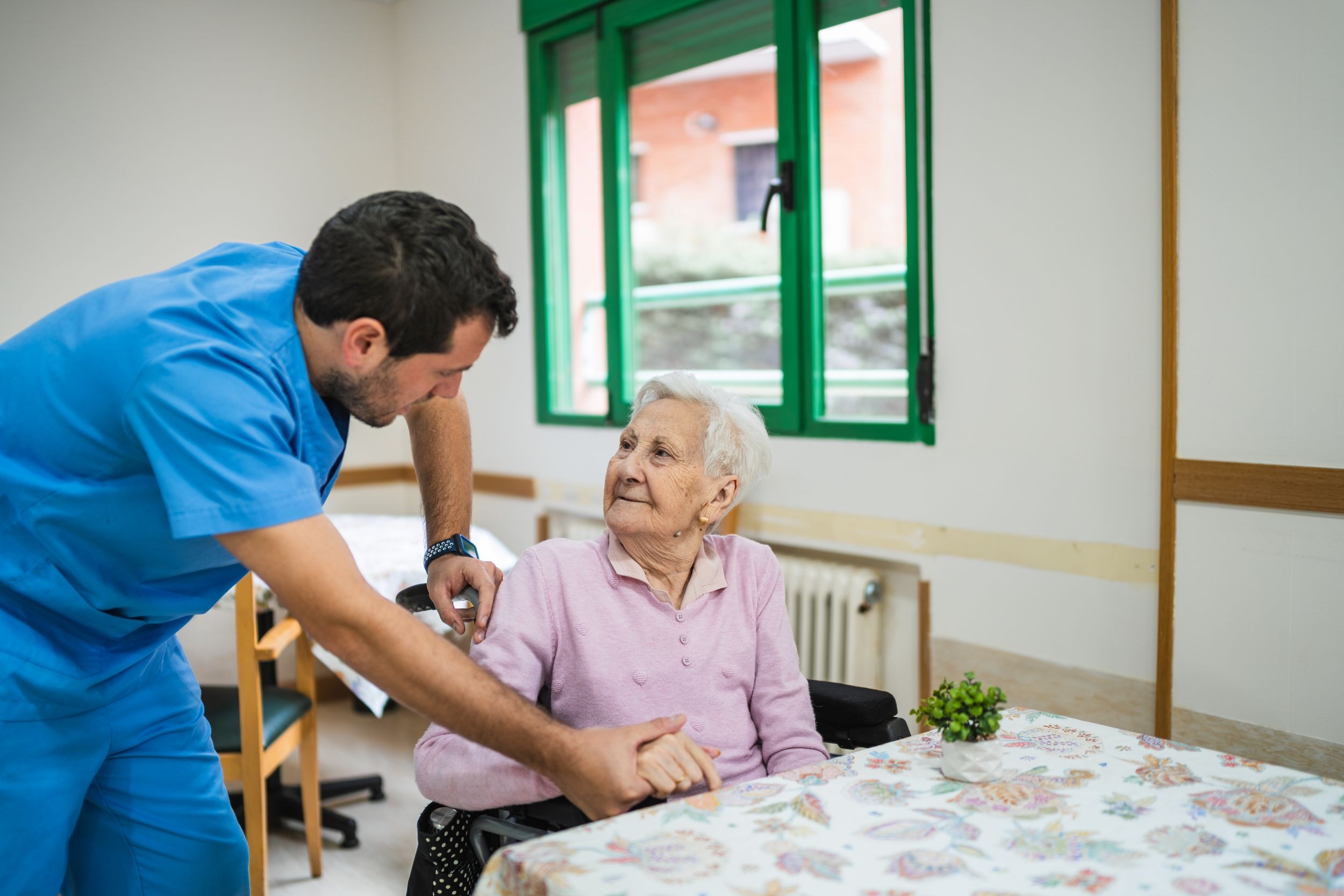
Care homes often provide some of the strongest pre-nursing experience because you see long-term care, frailty, dementia support, medication routines, and family communication. You also learn about dignity in a very practical sense because personal care sits at the centre of daily life.
Some applicants worry that care home experience feels ‘less relevant’ than hospitals. In practice, it often gives you richer examples because you build relationships and you see the ongoing impact of care.
Care home experience strengthens your application in several clear ways.
First, it shows you understand that nursing is not limited to wards. Nursing happens in communities, care homes, clinics, schools, and specialist services. When you understand this, you come across as more realistic and informed.
Second, care homes teach you about trust. Residents may feel frightened, frustrated, or embarrassed. They may also feel lonely. As a result, you learn that care is not only about tasks. It is also tone, patience, and respect.
Third, you learn the importance of routine and safety. Care environments rely on handovers, clear records, and consistent approaches. Even if you do not handle medication, you still see the structure around it. You also see how staff escalate concerns and work as a team.
If you are new to care, you can start in a gentler way. For example, you can volunteer in activities or companionship roles before taking on hands-on shifts. You can also request training and support, which many care providers offer as standard.
If you do work in a care home, you can reflect on topics that connect strongly to nursing interviews, such as:
- How you supported dignity during personal care.
- How you communicated with someone who felt confused or distressed.
- How you worked with colleagues when the environment felt busy.
- How you handled boundaries and confidentiality with families and visitors.
These reflections often become your strongest interview examples because they show real people skills, not just academic interest.
Support Worker Jobs Before Nursing
Paid care roles can be powerful because they show responsibility and commitment. They also teach you what care looks like on a difficult day, not only on a planned placement.
A support role can also help you decide which field of nursing fits you best. For example, some people feel drawn to mental health support work because they enjoy communication and relationship building. Others prefer physical health settings. Either way, the experience helps you make a more informed choice.
Support roles come in many forms. You might see job titles such as healthcare assistant, healthcare support worker, support worker, domiciliary carer, or rehabilitation assistant. These roles vary by setting, but they share a key theme: you support people with day-to-day needs while working within clear boundaries.
These roles can strengthen your application because they produce clear evidence of:
- Compassion under pressure.
- Calm communication with people who feel anxious, upset, or confused.
- Teamwork and willingness to ask for help.
- Comfort with dignity, privacy, and personal care.
- Respect for rules and routines, including infection control.
However, these roles can feel intense at first, especially if you have never worked in care. Therefore, some applicants start with volunteering or part-time shifts before moving into a more demanding role.
If you do take a support role, keep your reflection focused on learning rather than drama. Avoid sharing private details. Instead, focus on what you noticed, what you did, and what you learned.
This approach helps because nursing education values reflective practice. If you can show that you already reflect, you often come across as ready to train.
Relevant Non-Care Experience Examples
If you cannot secure care experience straight away, you can still build a strong nursing application. The goal is to show evidence of the behaviours and values nurses use, even if the setting is different.
This matters for many sixth-formers and Access to HE students because not everyone can take on a care job immediately. Still, you can build a convincing case if you connect your skills to real nursing behaviours.
Admissions teams respond well when you link everyday experience to nursing skills in a specific way. Generic statements like “I am caring” rarely help. Instead, show caring through a situation where you acted responsibly.
Here are common examples that can work when you reflect well:
- Customer service: You stayed calm, listened, and solved problems when someone felt angry or stressed.
- Childcare: You used patience, clear communication, and safeguarding awareness.
- Retail or hospitality: You prioritised tasks, followed hygiene rules, and worked under pressure.
- Youth clubs or sports coaching: You motivated others, handled conflict, and adapted communication.
- School leadership roles: You showed reliability, discretion, and responsibility.
To make these examples strong, you need to do three things.
First, describe the skill in action. Second, explain what you learned. Third, link it to nursing with a clear reason.
For example, you might write: “In a busy shop, I learned to stay calm when people felt frustrated. I listened first, then explained options clearly. This matters in nursing because patients often feel anxious, and calm communication can reduce distress and support safer care.”
This style shows insight. It also shows you understand nursing as a communication-heavy profession, not just a practical one.
How to Get Nursing Experience Fast
When deadlines approach, it is tempting to panic and apply everywhere at once. Instead, aim for a short plan that builds evidence quickly and avoids wasted effort.
Speed comes from focus. If you contact ten places with a generic message, you often get ignored. If you contact three places with a clear request and flexible availability, you tend to make progress.
Start by choosing two routes: one likely and one aspirational.
A realistic combination could be:
- A local care home volunteering or paid role (likely).
- A hospital volunteering application or NHS work experience request (aspirational).
Then follow a simple four-week approach.
Week 1: Prepare and clarify your goal
Decide what you want to learn. For instance, you may want to learn about dignity in care, communication with older adults, or teamwork in a busy environment. Create a simple CV and a short message template. Also, read the NHS Constitution for England so you can speak about values naturally.
Week 2: Apply in a focused way
Contact:
- Two local care homes.
- One local charity that offers befriending or hospital roles.
- Your local trust volunteering team through the NHS Volunteering site.
Follow up politely after 7 to 10 days. Keep a simple record of who you contacted and when.
Week 3: Build alternatives
If replies feel slow, add flexible routes such as the NHS and Care Volunteer Responders programme or community schemes via charities. You can also attend open days or insight events run by universities, which can help your understanding even if they do not count as ‘work experience’.
Week 4: Turn experience into evidence
Once you start something, even one shift, write short reflections. You do not need to write an essay. You simply need to capture:
- What you did.
- What you noticed.
- What you learned.
- How it connects to nursing.
This approach works because it produces both experience and reflection quickly. It also keeps your effort realistic while you study.
What If You Have No Experience
Some applicants reach application season with no formal experience. This is more common than you might think, especially for sixth-formers with limited time, limited contacts, or limited local opportunities.
If you are in this position, avoid hiding. Instead, be honest and strategic. You can still build a strong application by showing a realistic understanding, clear motivation, and actions you are taking now.
If you have no experience, focus on two messages.
1) You understand what nursing involves.
Use reputable sources to show you explored the reality of the role. For example, you can explore nursing roles and settings through NHS Health Careers. This helps you avoid vague statements and shows genuine research.
2) You are taking active steps to gain exposure.
Even if you have not started yet, you can explain what you are doing now, such as applying for volunteering, speaking to care staff you know, or arranging visits to local services where possible.
You can also use transferable examples from your life, especially where you showed responsibility, emotional maturity, and communication. Caring for a relative can be relevant, for example, as long as you write respectfully and avoid sharing private details.
Moreover, you can show values through how you behave. If you can explain a time you helped someone feel safe, listened without judgement, or stayed calm under stress, you can still demonstrate nursing potential.
Finally, remember that universities do not expect you to be a nurse already. They expect you to be honest, reflective, and ready to learn.
Writing About Experience in a UCAS Application
Experience only helps if you write about it well. Many applications fall down because they list tasks without reflection. Nursing admissions teams tend to prefer reflection because it shows you can learn from practice, which is essential in healthcare.
Writing well also protects you. If you mention patient details, you create a confidentiality risk. Instead, keep examples anonymous and focus on your actions and learning.
A simple structure works well: Situation – Action – Learning – Link.
- Situation: What happened?
- Action: What did you do?
- Learning: What did you learn about care, communication, or professionalism?
- Link: How does it connect to nursing and your readiness to train?
For example, instead of writing:
“I volunteered in a hospital and helped patients.”
Write something like:
“While volunteering, I learned that small interactions matter. I greeted people warmly, listened when they felt anxious, and noticed that calm explanations helped them feel more in control. As a result, I became more confident using reassuring language. This matters in nursing because communication can reduce distress and support safer care.”
If you want official guidance on the tone and content admissions tutors like to see, the UCAS nursing personal statement guide is a helpful reference.
To keep your statement focused, choose a few experiences and go deeper. In addition, show progression. If your first shift felt challenging, explain how you adapted. That proves resilience and self-awareness, which matter in nursing.

Reflective Writing Examples for Nursing Applications
Reflection is not about sounding impressive. It is about showing you can notice, learn, and improve. In healthcare, reflection supports safer care because you learn from what happened and adjust your approach.
If you feel unsure how reflective writing should sound, keep it clear and simple. Write what happened, write what you thought, then write what you would do next time. That is enough, and it often sounds more genuine.
Below are short example reflections you can adapt. They protect confidentiality and link learning to values.
Example 1: Communication and dignity
“During a care home shift, I supported a resident who felt embarrassed about needing help at mealtimes. I noticed that when I rushed, they withdrew and spoke less. Therefore, I slowed down, explained each step, and offered choices such as where to sit and what drink they preferred. As a result, they engaged more and ate better. This taught me that dignity is practical. It sits in tone, pace, and respect for choice. I want to develop this skill further during nurse training.”
Example 2: Teamwork and speaking up
“In a support role, I noticed a colleague looked overwhelmed while managing several tasks. Although I felt nervous, I offered help and asked what they needed most. We agreed a quick plan, and I raised a small concern with a senior so the team could respond safely. Afterwards, I realised good teamwork is proactive. It is also about communication, not blame. In nursing, I will need to speak up early to protect patients.”
Example 3: Boundaries and professionalism
“While volunteering, I learned how carefully staff protect confidentiality. I heard a visitor ask for information, and a staff member calmly explained they could not confirm details. This showed me that professionalism is not only a clinical skill. It is also about having respect for privacy and good judgement. Because of that, I now feel more aware of how I must handle personal information, both in person and online.”
As you can see, reflection does not need dramatic events. Simple moments often show your values most clearly.
Nursing Interview Questions on Experience
Nursing interviews often focus on values, communication, and readiness for placements. Some universities also use group tasks or scenario-based questions. Because of that, your preparation should go beyond memorising facts. You should practise explaining your experiences clearly and calmly.
The good news is that once you build a few reflective examples, interviews become easier. You walk in with real stories, not generic claims.
Common interview questions on experience
Here are a few common experience-linked questions and ways to answer them well:
- “What have you learned from your experience that changed your view of nursing?”
- Pick one clear insight, such as the emotional side of care, teamwork, or dignity.
- “Tell us about a time you supported someone who felt distressed.”
- Explain how you listened, stayed calm, and sought help when needed.
- “Describe a situation where you had to follow rules or policy.”
- Link your answer to safety and professionalism, such as hygiene rules, confidentiality, or reporting concerns.
- “How do you handle pressure?”
- Give a real example and explain coping strategies, such as planning, asking for support, and reflecting afterwards.
- “What would you do if you saw unsafe practice?”
- Show you would act and escalate appropriately because patient safety comes first.
If you want to strengthen your values answers, it helps to read the NHS Constitution and think about how the values show up in everyday behaviour. Interviewers often care more about how you think than about perfect wording.
Values-Based Recruitment for Nursing
Nursing selection in the UK often uses values-based recruitment. The idea is simple: universities and employers want people whose behaviours align with NHS values, not only people who can pass exams.
Values-based approaches also protect patients. When someone has the right values, they are more likely to act safely, communicate respectfully, and raise concerns early.
The NHS uses values-based recruitment to assess candidates’ behaviours and how they align with the NHS Constitution. You can explore the approach and why it matters through NHS Employers values-based recruitment.
In practice, values-based recruitment means interviewers look for real examples of how you behave. They often explore values such as:
- Working together for patients.
- Respect and dignity.
- Commitment to quality of care.
- Compassion.
- Improving lives.
- Everyone counts.
To prepare, match each value to a real example from your life. Keep it grounded. For instance, ‘working together’ might mean helping a colleague during a busy shift. ‘Everyone counts’ might mean adapting your communication so that someone feels included and respected.
In addition, remember that values-based recruitment is not about being perfect. It is about being honest, reflective, and willing to learn. If you show that clearly, you often stand out.
Experience for Nursing Apprenticeships in the UK
Nursing apprenticeships offer a different route into registration. They combine paid employment with university study, which can suit people who want to earn while they learn. However, because you work in practice from early on, employers often expect you to already have relevant experience or to be ready for a support role.
Apprenticeships can also be competitive because vacancies depend on employer need. Therefore, planning early and building experience in care can improve your chances.
If you aim for an apprenticeship, support roles can become a practical stepping stone. A healthcare assistant role, a support worker job, or a care assistant position can help you build evidence, confidence, and employer relationships.
Apprenticeships still assess values. They also still require suitability checks. So, even if you take a work-based route, you will benefit from the same core preparation: reflective examples, understanding of nursing realities, and a clear link to NHS values.
It can also help to explore what apprenticeships involve at a national level so you understand expectations around training, supervision, and progression. Many applicants start by exploring NHS role pathways through NHS Health Careers before they decide between full-time study and an apprenticeship route.

DBS and Occupational Health Checks
Once you receive an offer for nursing, universities and placement providers need to confirm that you can train safely. That is why DBS and occupational health checks matter. Many students first hear about these checks after they apply, so it helps to understand them early.
These checks can also take time. Therefore, as soon as you receive instructions from your university, act quickly so you do not delay placement eligibility.
Most nursing programmes involve regulated activity with adults and/or children. Because of that, you will usually need an enhanced DBS clearance before you start placements. If you want to understand the process in more detail, the GOV.UK DBS guidance explains DBS checks and how organisations use them.
Alongside DBS, you will usually complete occupational health screening. In NHS recruitment, employers commonly complete pre-employment checks that include occupational health assessment. The NHS Jobs pre-employment checks guide gives a helpful overview of what candidates can expect, including occupational health checks.
In practical terms, this usually means:
- You complete a DBS application through the university or its approved provider.
- You complete an occupational health questionnaire about health history and any adjustments you may need.
- You may need to provide evidence of immunisations or attend an appointment, depending on placement requirements.
- You should be honest and timely, because delays can affect placements.
If you have concerns about health or disclosures, contact the admissions team early. Early conversations usually feel less stressful, and they often lead to clearer support.
Conclusion
You do not always need formal work experience to apply for nursing in the UK, but you do need evidence that you understand the role and the realities of care. Therefore, the real question is not “Did you shadow an NHS nurse?” It is “Can you show that you have explored nursing, learned from what you saw, and developed the values and behaviours the profession requires?”
If you can access NHS shadowing or hospital volunteering, that can help. However, care home roles, support work, and community volunteering can meet the same intent, and they often provide richer insight because you build relationships over time. Meanwhile, if you have no experience yet, you can still strengthen your application by showing a realistic understanding, clear motivation, and active steps you are taking now.
Finally, remember that selection is values-driven. When you describe your experiences, focus on what you learned about dignity, communication, teamwork, and safety. If you do that well – and back it up with honest reflection – you will give yourself the best chance of an offer.